
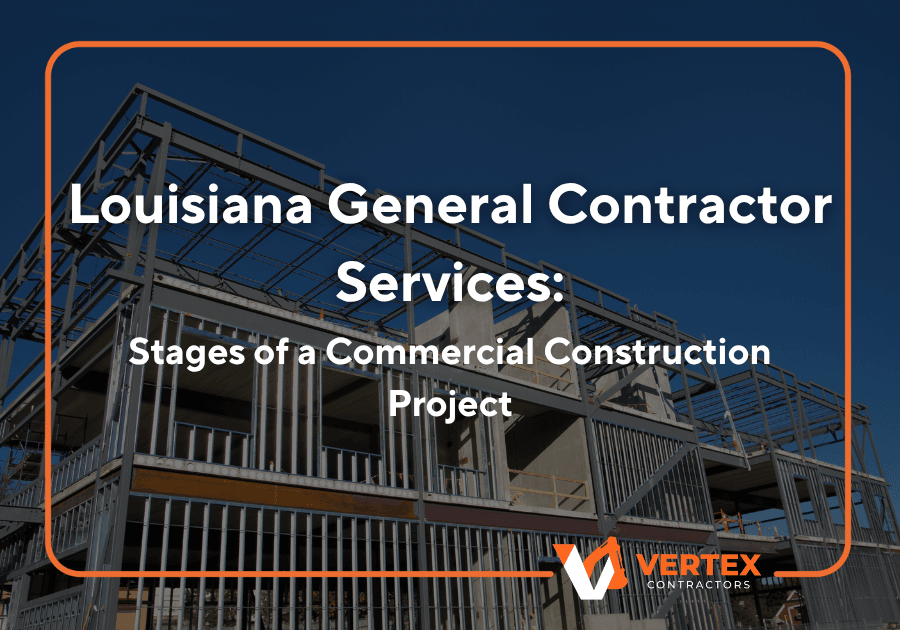
A commercial construction project can become stressful quickly when you are not sure what should happen next. Delays, unclear timelines, unexpected requirements, and poor communication can make it difficult to plan around your business operations or know whether the project is actually on track. For owners and developers preparing to build in Louisiana, knowing what to expect from a Louisiana general contractor, like Vertex Constructors, can make the process easier to manage and help you spot problems before they become expensive setbacks. From the first stages of construction through final completion, having a clear understanding of the process gives you a better basis for planning, communication, and decision-making.
Table of Contents
The Stages of a Commercial Construction Project
A commercial construction build moves through distinct phases, and each phase requires specific management to keep the overall project on schedule and within budget.
- Planning and Pre-Construction: Before physical work begins, the project team establishes the scope, budget, schedule, site requirements, and other details that will guide construction. This stage may include reviewing plans, coordinating with designers and engineers, assessing site conditions, obtaining permits, and identifying potential issues that could affect the project later.
- Site Preparation: Once the project is ready to proceed, the site must be prepared for construction. Depending on the property, this may involve clearing land, demolition, excavation, grading, drainage work, utility coordination, and establishing access for construction equipment.
- Structural and Exterior Build: The building takes shape physically. Workers pour concrete foundations, erect structural steel or framing, install exterior walls, and seal the roof to make the building weather-tight.
- Interior Systems and Finish Work: Subcontractors install mechanical, electrical, and plumbing (MEP) systems behind the walls. Once inspections pass, drywall, flooring, lighting, and interior finishes are completed to prepare the space for daily operation.
- Final Inspection and Handover: Near completion, attention shifts toward inspections, finishing work, testing, corrections, and final approvals. Any outstanding items identified during inspections or walkthroughs need to be addressed before the project can be formally completed. The final stage is not simply about finishing the physical building. Documentation, warranties, operating information, and other closeout requirements may also need to be completed before the owner takes full possession of the finished project.
Understanding these stages gives owners a clearer picture of where their project should be at any given point and what needs to happen before the next phase can begin.
What a Reliable General Contractor Should Deliver at Every Stage
Knowing the stages of construction is helpful, but true peace of mind comes from knowing what your builder should be delivering behind the scenes throughout the build. A reliable Louisiana general contractor does far more than coordinate trades and heavy machinery; they manage risk, control costs, and maintain momentum from day one.
Here is what you should expect from your builder during every phase:
- Clear and Consistent Communication: You should never have to guess where your project stands. Reliable contractors establish a routine for progress updates, photo documentation, and schedule reviews, so you always know what was completed this week and what is planned for the next.
- Transparent Budget Tracking: Cost tracking should be open and predictable. If site conditions change or design revisions occur, your contractor should provide written estimates and secure your approval before any additional work takes place.
- Subcontractor and Quality Oversight: Managing multiple specialized trades requires constant supervision. A dependable contractor enforces quality standards on-site, ensuring that work is done correctly the first time and according to approved engineering plans.
- Proactive Problem-Solving: When unexpected delays hit—whether material backorders or sudden weather shifts—a strong builder brings solutions to the table immediately, offering realistic schedule adjustments to keep the build moving forward.
Staying Compliant and Safe Throughout the Build
Compliance and safety aren’t a single checkpoint near the end of a project — they run through every stage described above. Permits obtained during pre-construction have to be maintained and updated if the scope changes, and inspections tied to those permits happen at defined points throughout construction, not just at completion. Skipping or rushing an inspection to keep the schedule moving is one of the more common ways commercial projects run into costly problems later, since work that hasn’t been verified against code can require costly rework if it’s discovered after the fact.
Safety follows the same pattern. Site preparation carries different risks than structural work, which carries different risks than finish work — a contractor with real safety protocols adjusts practices as the project moves through these phases rather than applying one generic safety plan regardless of what’s actually happening on site. Louisiana’s climate adds its own safety considerations too, from heat-related risks during summer construction to the added hazards of working on wet or unstable ground after heavy rain. A Louisiana general contractor who takes compliance and safety seriously treats both as ongoing responsibilities tied to the specific stage of work, not boxes checked once and forgotten.
Why Local Experience Changes the Outcome
Construction conditions vary by region. In Louisiana, local experience helps contractors plan for soil, drainage, weather, environmental factors, and local requirements that can affect a commercial project. Working with an established Louisiana general contractor brings critical regional advantages to your build:
- Understanding Louisiana Site Conditions: Soil quality, drainage, grading, and earthwork can affect site preparation and foundations. A local contractor can identify potential issues early and plan accordingly.
- Planning Around Weather: Heavy rain can delay excavation, concrete work, equipment access, and other outdoor activities. Local experience helps contractors schedule work more effectively and prepare for weather-related changes.
- Knowing the Local Construction Environment: Contractors familiar with Louisiana understand how to coordinate with local authorities, inspectors, suppliers, and subcontractors. This can improve communication and help keep the project moving.
- Applying Local Knowledge: Local experience allows contractors to anticipate regional challenges instead of reacting to them later. Combined with strong project management, it supports a smoother and more efficient build.
At Vertex Constructors, we bring decades of direct ground-level experience across Louisiana commercial, industrial, and civil sites. Having a partner who understands the local terrain, weather dynamics, and regulatory landscape ensures your project moves from blueprint to finished structure without avoidable delays or expensive surprises.
Conclusion
A commercial construction project becomes much easier to manage when you know what should happen at each stage and what to expect from the team overseeing the work. Understanding the construction process, maintaining compliance and safety, and accounting for Louisiana’s local conditions can help you stay ahead of delays, unexpected costs, and communication problems. Choosing an experienced Louisiana general contractor also gives you a partner who can coordinate the moving parts and respond when conditions change, rather than leaving you to solve problems as they arise.
At Vertex Constructors, our goal is to deliver reliable, high-quality commercial, industrial, and civil projects without the usual stress and hidden costs. Visit our homepage to learn more about our capabilities, and let us build a solid, dependable foundation for your next project.