
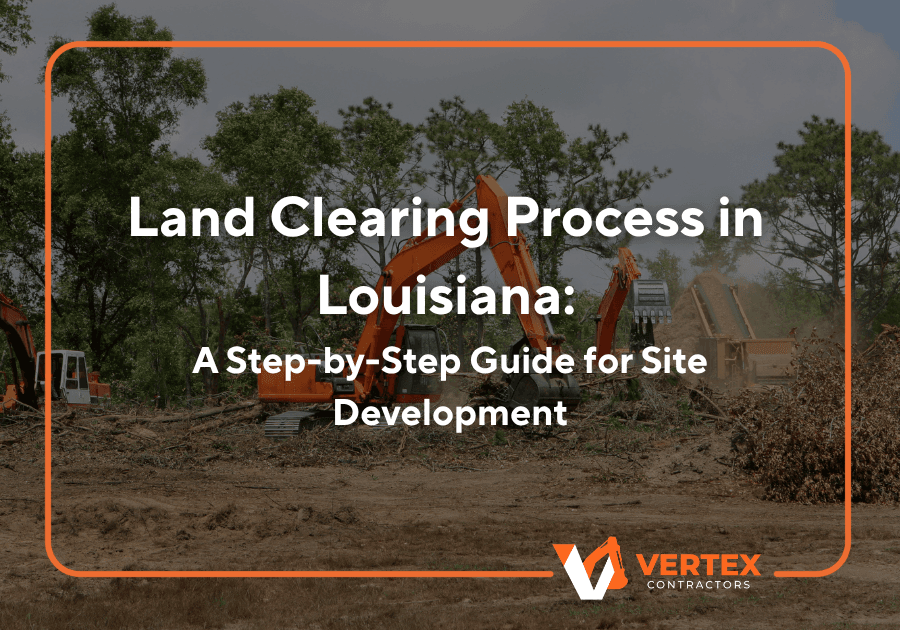
An overgrown, uneven lot can stall a project before it ever starts. Property owners and developers often find out too late that dense vegetation, buried stumps, poor drainage, or soft ground means weeks of unexpected delays, equipment that can’t get on site, and costs that weren’t in the original budget. Understanding the land clearing process in Louisiana sites typically require is what allows an owner to plan realistically, budget accurately, and avoid discovering problems after crews have already mobilized. Whether the project is a commercial build, an industrial facility, or a civil earthwork job, what happens in these early stages shapes everything that follows.
Table of Contents
Why Land Clearing Is the First Step in Site Development
Land clearing is much more than just cutting down trees or mowing tall grass; it is the physical baseline for the entire construction project. Every commercial, industrial, or civil structure requires a stable, compacted foundation, and that stability is impossible to achieve if the soil is filled with rotting root systems, buried brush, or unstable organic matter. If a builder attempts to pour concrete or lay asphalt over poorly cleared ground, the organic debris will eventually decay beneath the surface, causing the soil to shift, sink, and crack the foundation above it. Beyond preventing structural failure, removing this debris and leveling the dirt establishes the initial grading needed to keep rainwater draining away from the future building. This ensures the site remains secure, dry, and accessible for heavy equipment as the rest of the construction phases move forward.
Typical Steps in the Land Clearing Process in Louisiana
While every property is different, most projects follow a similar sequence from raw land to build-ready site.
Step 1: Site assessment and planning
Before any equipment arrives, the contractor walks the property to evaluate what’s actually there — the density and type of vegetation, existing structures, soil conditions, drainage patterns, slope, and whether any portion of the site may be classified as wetlands. This assessment determines what equipment will be needed, how long the work will take, and whether any regulatory approvals apply before clearing can begin.
Step 2: Securing permits and approvals
Depending on the location, size, and nature of the project, clearing work may require permits from parish authorities, state agencies, or federal bodies — particularly where wetlands, protected waterways, or drainage systems are involved. This step is where inexperienced contractors most often create problems for property owners, since work performed without proper authorization can result in stop-work orders, fines, or costly remediation.
Step 3: Removing trees and heavy vegetation
With approvals in place, crews begin clearing standing timber, underbrush, and dense growth. On Louisiana properties, this often means dealing with mature hardwoods, thick undergrowth, and vegetation that has been left to grow for years — work that requires proper equipment and careful sequencing to keep the site safe and accessible as material comes down.
Step 4: Stump and root removal
Cutting a tree down leaves the harder problem underground. Stumps and root systems must be pulled out entirely, since anything left behind decays over time and causes the soil above it to settle and shift. This is the step most often shortcut on cheap bids, and it’s the one most likely to cause foundation problems years later.
Step 5: Debris handling and haul-off
Cleared material has to go somewhere. Depending on the project, debris may be mulched on site, burned where permitted, or hauled off entirely. Proper disposal matters both for regulatory compliance and for leaving the site genuinely clean rather than simply relocating the problem to a corner of the property.
Step 6: Grading and final site preparation
With the ground cleared, the site is graded to establish the elevations and slopes the project requires — directing water away from where the structure will sit, creating stable surfaces for equipment and materials, and delivering ground that’s ready for foundation work to begin.
Navigating Louisiana’s Climate, Soil, and Environmental Regulations
Every region has its challenges, but the land clearing process in Louisiana developers face requires specific local knowledge. The environment here is unforgiving to poorly planned projects.
Soft Soil and Heavy Rain
Much of Louisiana’s clay-heavy soil holds water and turns into deep mud very quickly. If heavy machinery drives over the site right after a storm, it compresses the wet soil, ruining its ability to drain and creating an unworkable surface. Experienced crews know how to schedule around the weather and use equipment that minimizes ground pressure.
Dense Vegetation
The humid subtropical climate encourages fast, thick growth. Removing mature hardwoods and dense palmetto brush requires specialized, high-horsepower machinery rather than standard residential equipment.
Strict Environmental Compliance
Louisiana enforces stormwater regulations to protect its waterways, and construction projects that disturb an acre or more of land generally require a formal plan showing how the site will keep mud and runoff from washing into local drains. The requirements can also apply to smaller parcels that form part of a larger development, which catches some property owners off guard. Because the details depend on the size and location of your project, it’s worth confirming what applies through the Louisiana Department of Environmental Quality at this website. Failing to file the required paperwork or ignoring wetland boundaries can lead to enforcement action and penalties from the state.
Why Hiring Experienced Professionals Matters
It can be tempting to hire a cheap, unverified crew with a single bulldozer to scrape a lot clean, but that decision usually costs more in the long run. Clearing a commercial or industrial site is heavy, dangerous work that carries significant legal and financial liability.
Professionals bring the right equipment for the job, ensuring the land is cleared efficiently without damaging the underlying soil structure. They also understand the administrative side of the project, filing the correct environmental permits and managing runoff controls so your build is not delayed by local authorities. Most importantly, a licensed and fully insured contractor protects the property owner from liability if an accident happens or if underground utility lines are struck.
Ultimately, a properly managed land clearing process Louisiana project owners can rely on creates more than an empty site. It creates safe access, workable ground, proper drainage, and a better starting point for the construction investment that follows.
Conclusion
Skipping steps or relying on under-equipped crews is the fastest way to turn a raw piece of land into a financial liability. The complete land clearing process Louisiana developers rely on is specifically designed to eliminate the problems that keep site owners up at night—whether it is hidden stumps that crack your future foundation, poor drainage that turns a site into an unworkable mud pit, or surprise environmental fines that halt your schedule entirely. By systematically assessing the land, securing the correct permits, extracting deep root systems, and establishing a proper grade, you remove the guesswork and create a stable, reliable baseline for the rest of your build.
You do not have to deal with thick underbrush, heavy delta soils, and strict stormwater regulations on your own. If you are ready to prepare your commercial, industrial, or civil site without the stress of unexpected delays or hidden costs, the team at Vertex Constructors has the local expertise to get the job done right. Reach out to discuss your site requirements and explore their professional land clearing services to get your next project off to a strong, fully compliant start.