
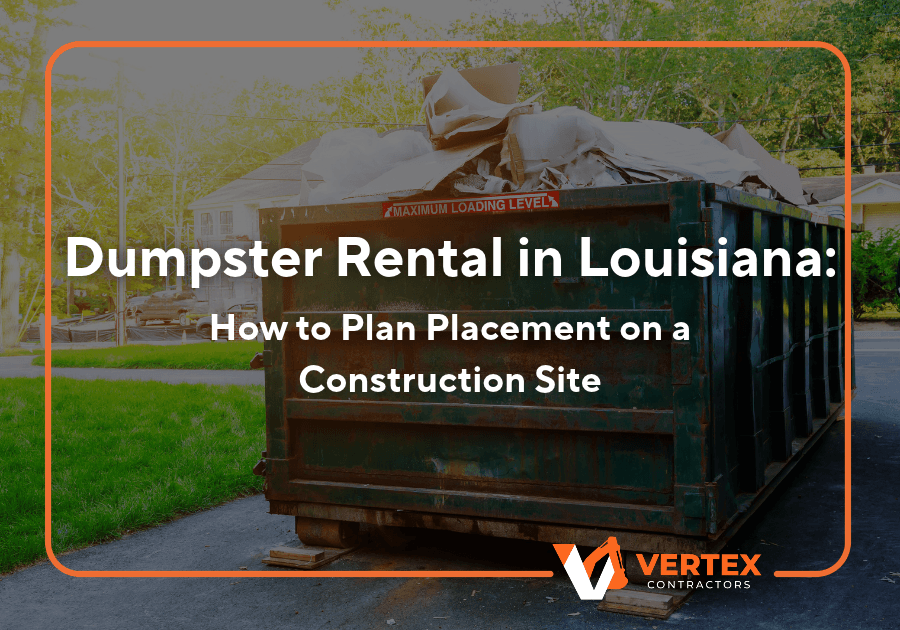
Construction projects can generate large amounts of debris, and a poorly placed dumpster can quickly become an obstacle rather than a convenient part of the site. It may block equipment routes, make it harder for workers to dispose of materials, or prevent collection trucks from accessing the container when it needs to be emptied. These problems can disrupt daily operations, create unnecessary safety risks, and lead to avoidable delays. When arranging dumpster rental in Louisiana, contractors and project owners need to think beyond container size and consider where it will sit throughout the job. Planning its placement early can help keep the site organized, maintain safe access, and make debris removal more efficient.
Table of Contents
Why Dumpster Placement Matters on a Construction Site
A construction dumpster may seem like a small detail in a larger project, but its location can affect how smoothly the entire site operates. When debris has a designated collection point that works with the layout of the project, workers can dispose of materials without repeatedly crossing active work areas or interrupting other tasks. This helps keep the site more organized and allows construction activities to continue with fewer unnecessary obstacles.
Poor placement, on the other hand, can create problems that extend beyond waste collection. A dumpster positioned in front of an access route may restrict the movement of delivery vehicles, heavy equipment, or emergency services. If it is too far from the main work area, workers may spend additional time carrying debris across the site. A container placed near a busy pedestrian route can also increase the risk of trips, collisions, and other workplace accidents.
Placement can also affect project costs and scheduling. If a collection truck cannot reach the dumpster easily, removing or exchanging a full container may take longer than expected. In some cases, the container may need to be repositioned, adding extra coordination and potentially delaying other site activities. These disruptions can be especially inconvenient when several contractors, deliveries, and construction tasks are happening at the same time.
Thinking about dumpster placement before work begins helps avoid these issues. It allows project managers to account for waste removal alongside equipment movement, material deliveries, and worker access. For contractors planning dumpster rental in Louisiana, treating the dumpster as part of the overall site layout—not simply finding an empty space for it—can make daily operations safer and more efficient.
How to Choose the Right Location for Your Construction Dumpster
Picking the best spot for a construction dumpster comes down to balancing crew convenience with ground stability. The container should sit close enough to the main work area—such as near a demolition zone, debris chute, or primary building exit—so workers do not waste time hauling heavy loads across the entire property. At the same time, it needs enough separation from active construction zones and material staging areas so it never gets in the way of daily tasks.
Pay close attention to the surface underneath the container. Roll-off dumpsters weigh several tons even before they are loaded, so they require flat, firm, and level ground. Concrete slabs, asphalt driveways, and well-compacted gravel pads provide the most reliable support. If the bin must sit on a finished driveway or paved lot, placing thick wooden planks or plywood sheets underneath helps spread the weight and prevents surface cracks or scrapes. Before finalizing the spot, also check what lies underground—never place a heavy container directly over septic tanks, drain fields, or shallow utility lines that could collapse under pressure.
Finally, leave enough clearance around the container for easy loading. Most construction dumpsters feature a heavy rear door that swings open so crews can walk bulky items like drywall sheets, framing lumber, or old cabinetry straight inside rather than lifting them over high steel walls. Leaving at least eight to ten feet of open space behind the dumpster ensures that door can swing open completely without hitting a fence, wall, or pile of supplies.
Planning for Truck Access, Site Safety, and Placement Requirements
Once you have a spot in mind, look at the layout from the delivery driver’s perspective. Roll-off containers are delivered by large commercial trucks that need a clear, straight-line approach to back in, lower the bin, and pull away safely. Narrow gates, sharp turns, or vehicles parked along the drive lane can block access and delay scheduled pickups. Keeping a wide, unobstructed path to the container throughout the build ensures swaps happen smoothly.
Look up before the truck arrives as well. To slide a roll-off container onto the ground or pull a full one back onto the truck, the driver raises the hydraulic bed high into the air. Low-hanging tree branches, overhead power lines, or utility cables directly above the drop zone can make delivery impossible or create a serious safety hazard. Make sure both the drop spot and the truck’s approach path have plenty of overhead clearance.
Safe daily loading habits also protect your crew and keep your site compliant:
- Keep pathways clear: Position the container well away from pedestrian walkways, building entrances, fire hydrants, and emergency access lanes.
- Never load above the top edge: Keep all debris level with or below the container’s walls. Drivers are legally required to tarp loads before driving on public roads, and an overfilled bin cannot be hauled safely.
- Spread weight evenly: Distribute dense materials like brick, concrete, or tile evenly across the bottom of the bin rather than stacking them all on one end, which can shift the container during pickup.
- Separate restricted waste early: Set aside wet paint, batteries, tires, appliances, and hazardous materials separately so banned items do not end up in the main container and trigger rejection fees.
Building these practical checks into your plan for dumpster rental in Louisiana keeps your site safer and prevents unexpected haul-away delays.
Placement Permits and Louisiana Weather Conditions
Where the dumpster sits can also determine whether you need approval. If the container goes on private property, such as the construction site itself, permits are often less of an issue. If it has to be placed on a street, sidewalk, or other public right-of-way, local rules may require a permit, and they often set limits on how long it can stay and how it must be marked. These requirements differ by city and parish, so check with the local authority before the delivery date. Your rental provider can often tell you what applies in your area, but the responsibility for confirming it usually rests with the project owner or contractor.
Louisiana’s weather adds another layer to the plan. Heavy rain can soften the ground around the dumpster and make it harder for the truck to reach, and a loaded container on soft ground can sink or tilt. Choose a spot with good drainage, away from low areas where water collects. Avoid blocking natural drainage paths, because water that can’t flow away may flood the site or the neighboring property. Standing water inside an open dumpster adds weight and can make loads heavier than expected, so cover it when possible, particularly before forecast rain.
Storms and flooding risk call for extra attention. High winds can scatter light debris from an open container, so secure loose material and close lids or tarps when a storm approaches. If heavy weather is forecast, ask your provider about timing for pickup and whether the container should be emptied beforehand. Putting weather into the placement plan from the start is one of the more practical ways to make dumpster rental in Louisiana work for a construction site, and it avoids paying to fix problems that bad ground or bad timing create.
Conclusion
A dumpster in the wrong spot rarely looks like a problem until it is one: a truck that can’t reach it, a container sinking into soft ground after the first heavy rain, or a walkway crews have to work around every day. Choosing a location that suits the site, leaving room for trucks to get in and out, checking whether a placement permit applies, and planning for Louisiana’s rain and storms keeps these small details from becoming delays. Thinking through dumpster rental in Louisiana before the container arrives is one of the simplest ways to keep a construction site safe, organized, and on schedule.
If your project involves demolition or site preparation, having the right contractor can make the process easier to manage. At Vertex Contractors, we provide demolition services to help prepare properties for their next stage of development. Visit our demolition services page to learn more about our services and how we can support your upcoming project.