
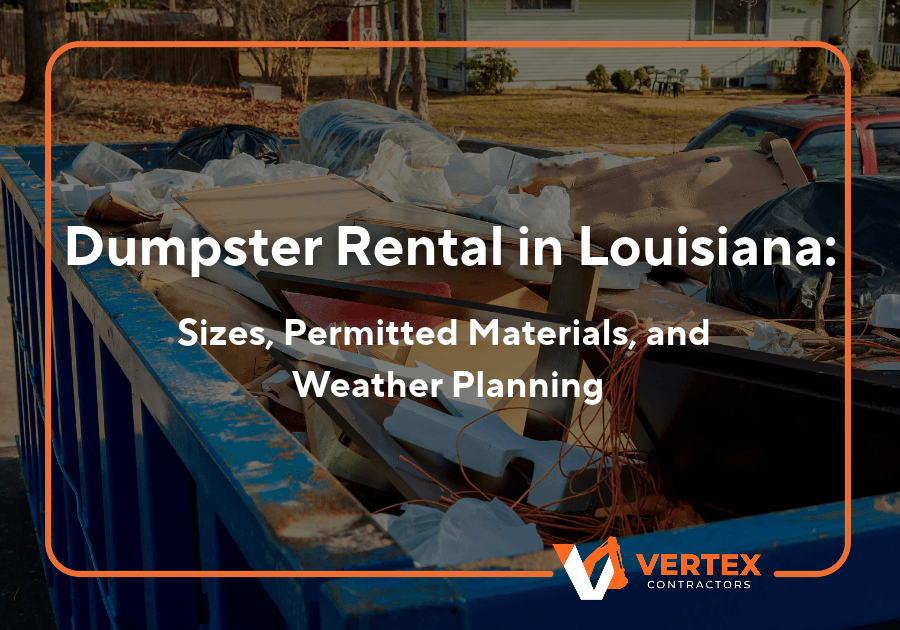
Piling up piles of shattered concrete, timber, and roofing debris on an active job site creates an immediate safety hazard, clutters access roads, and brings ongoing work to a crawling halt. For property owners and developers managing a commercial build, renovation, or demolition project, disorganized waste disposal quickly leads to unexpected landfill weight penalties, municipal violation notices, and costly schedule delays. Choosing the wrong container, underestimating the amount of waste, or overlooking disposal restrictions can lead to extra charges, collection delays, and unnecessary complications. Planning dumpster rental in Louisiana carefully helps you manage debris more efficiently, protect the work area, and avoid preventable problems. Understanding how rentals are arranged and what to consider before booking can make the cleanup process easier from start to finish.
Table of Contents
How Dumpster Rental Works for Demolition and Site Cleanup
The first step in arranging a dumpster rental is estimating how much debris your project will generate and what materials need to be removed. A small renovation may require a different container from a full building demolition or a large property cleanup. Consider the size of the project, the type of waste, and how quickly debris will accumulate.
Roll-off dumpsters come in standard industrial sizes—typically 10, 20, 30, and 40 cubic yards—each designed for specific load types and weight limits. Heavy, dense materials like crushed concrete, brick, and dirt require smaller, high-capacity containers to prevent exceeding road weight limits, while lighter, bulkier debris like wood framing, drywall, and tree branches fit best in larger roll-off bins. If you are unsure, describe the work to the rental provider and ask for guidance on the appropriate container size and weight allowance.
Next, plan where the dumpster will be placed and when it needs to arrive. The location should provide enough room for delivery, safe loading, and later collection without blocking essential access routes or interfering with ongoing work. If the container will sit on a public street or another restricted area, check whether permission or a permit is required. You should also confirm the rental period, delivery and pickup arrangements, weight limits, and any additional charges for exceeding those limits or keeping the container longer than planned.
For demolition and site preparation projects, timing matters just as much as container size. Scheduling delivery before debris begins to pile up can help keep work areas clear and reduce the need to move waste multiple time. Coordinate the rental with the contractor’s work schedule, especially if heavy materials will be removed in stages. When planning dumpster rental in Louisiana, allow some flexibility for weather disruptions or changes in the amount of debris generated. A clear plan for container size, placement, and collection can help keep the site organized and the project moving.
What Can and Cannot Go in a Rental Dumpster?
Before filling out a dumpster on a job site, it is critical to understand what materials of landfills are accepted. Most standard roll-off containers are designed for mixed construction debris and general site waste, but mixing prohibited items into a standard load can lead to rejected pickups, extra sorting fees, or unexpected fines.
Generally permitted items include:
- Construction and demolition debris: Wood framing, drywall, concrete, brick, tile, roofing shingles, and siding.
- General site waste: Packaging materials, cardboard, carpeting, and non-hazardous scrap metal.
- Vegetative debris: Tree branches, brushes, and root matter from land clearing work (though some local facilities require clean wood to be kept separate for recycling).
On the other hand, items like wet paint, liquids, car batteries, motor oil, tires, appliances containing refrigerants, and electronics are strictly banned from standard construction roll-offs. Placing heavy materials like concrete or dirt into large 30- or 40-yard dumpsters can also violate weight limits, even if the container looks half-empty. Knowing these restrictions ahead of time ensures that your dumpster rental in Louisiana stays compliant and avoids surprise charges at the scale.
Handling Hazardous Materials and Following Disposal Requirements
Demolition and major site cleanups frequently uncover regulated or hazardous materials that cannot go into standard landfills. In older buildings, asbestos insulation, lead-painted wood, and mercury-containing light fixtures are common finds. Throwing these items into a general roll-off container is illegal and poses severe health and environmental risks.
Hazardous waste requires special handling, dedicated containment, and disposal at certified regional facilities. State environmental regulations mandate that materials like asbestos be abated by licensed professionals and transported in sealed, properly labeled containers. Similarly, chemical containers, fuel tanks, and treated industrial lumber must follow specific disposal protocols. Working with a contractor who understands local environmental rules ensures that regulated waste is separated early, handled legally, and documented properly from pickup to disposal.
Planning Dumpster Rental Around Louisiana Weather, Access, and Project Timelines
Louisiana’s weather can affect how safely and efficiently debris is collected. Heavy rain can leave work areas muddy, soften the ground beneath a loaded dumpster, and make delivery or pickup more difficult. During hurricane season, severe weather may also disrupt project schedules, restrict site access, or increase the amount of debris that needs to be removed.
Plan the dumpster’s placement with these conditions in mind. Choose a firm, level area that can support the container and the delivery truck, and avoid locations where standing water or poor drainage could create problems. If the dumpster must be placed on a driveway, paved area, or other surface that could be damaged by its weight, discuss suitable placement and protection with the provider. Keep access routes clear so the container can be delivered and collected without interfering with other work.
Weather planning also means thinking about loose debris. Lightweight materials such as insulation, plastic sheeting, and packaging can blow away in strong winds if they are not secured properly. Keep waste inside the container, follow the provider’s rules for covering it, and never load materials above the permitted fill line. If severe weather is forecast, check with the rental provider about securing the container, postponing delivery, or adjusting the pickup schedule.
Finally, coordinate delivery and collection with the work taking place on site. A dumpster that arrives too early may occupy valuable space, while one that fills up before the next pickup can delay demolition or cleanup. Allow room in the schedule for weather-related changes and confirm how extra rental days or additional pickups will be charged. Planning dumpster rental in Louisiana around site access, ground conditions, and the project timeline helps keep debris under control while reducing the chance that weather or collection issues will hold up the work.
Conclusion
Managing a demolition or construction site is stressful enough without having to worry about overflowing trash, surprise landfill fees, or unexpected delays because a container wasn’t swapped out in time. When you plan your dumpster rental in Louisiana with the right container sizes, clear weight limits, and a solid weather strategy, you eliminate the debris bottlenecks that bring so many commercial projects to a halt. Instead of dealing with hazardous piles of waste or municipal fines, your crew can stay focused on keeping the actual work safely on schedule.
You don’t have to navigate the logistics of site cleanup and waste disposal alone. At Vertex Contractors, we incorporate efficient debris management directly into our site preparation work, ensuring your property stays clean, safe, and fully compliant from start to finish. If you are preparing for a tear-down or major site clearing, visit our demolition services page to learn how we can handle the heavy lifting and keep your project moving forward smoothly.